June 2011 - First Nations, Inuit and Métis fathers are one of the "greatest untapped resources in the lives of Aboriginal children," in the words of Grand Chief Ed John, of the BC First Nations Summit. [1] His statement points to the huge gap in the lives of children, families and communities when Dads are not included, as well as the profound difference Dads can make in child health and well-being when there is understanding of their needs, respect for their perspectives, support for their healing and encouragement of their involvement.
A national showcase hosted by the National Collaborating Centre for Aboriginal Health in Ottawa on February 23-24, 2011 is a key step in helping to address a pressing need to support Indigenous fathers in communities, programs, research and policies in Canada.
Disruption of parenting across several generations in First Nations, Inuit and Métis families is a result of colonization, residential school systems, and policies of forced assimilation affecting languages, cultures, ties to land and families. As understanding of the connection between father involvement and the health of children grows, more and more people are asking: What do dads need in their journey as fathers? How can we support participation of fathers in family-centered services? What teachings are important for children to learn? (See program).


Participants at the event included Dads like Leo Hébert who learned in mid-life how to connect emotionally with his family; Elders like Rose Point who shared insight into how she was raised as a child; and program leaders like Jake Gearheard who touched on radical social and cultural change for Inuit men in the Arctic. Together, the participants shared their collective wisdom, life experience and knowledge gained on their individual journeys. Again and again, the message reverberated: fathers must be invited back into the family and community circle, and their healing journeys supported for the health of children, families, and First Nations, Inuit and Métis nations.
Keynote speakers included:
- Mike DeGagné, executive director of the Aboriginal Healing Foundation, a national Aboriginal organization dedicated to addressing the legacy of Canada's Indian Residential School System. Mr. DeGagné has worked in the field of addiction and mental health for the past 25 years.
- Dr. Jessica Ball, member of the Father Involvement Research Alliance (see Indigenous Fathers) and a co-principal investigator in the first national study of fatherhood, leading the Indigenous fathers component of the study. She is a Professor at the School of Child and Youth Care, University of Victoria, and co-coordinator of First Nations Partnership Programs at UVic.
- Albert Pooley, president and founder of the Native American Fatherhood and Families Association in the United States. Mr. Pooley is of Navajo and Hopi heritage, and is internationally recognized for his Fatherhood is Sacred™ program designed to meet the needs of Native Americans.
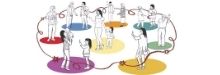
A film of the event is now being produced to share with organizations and individuals. Artisitic renderings of insights shared at the event are included in the index to the left; copies may be requested from the NCCAH. We welcome your comments: nccah@unbc.ca.


Starting with a Healing Journey
Keynote address with Mike DeGagné, Aboriginal Healing Foundation
Mike DeGagné of the Aboriginal Healing Foundation, opened the event and set the tone for the gathering...
He said in his experience, fatherhood is a healing journey. As executive director of the Aboriginal Healing Foundation, which supports recovery from the trauma of the residential school system, he has seen the devastating impact on First Nations, Inuit and Métis fathers and their roles as teachers, guides, providers and guardians.
“Residential schools taught Aboriginal people to do as you are told, question your own core values and customs, become something else - which, translated, means: become something better. You were taught your parents have far less wisdom and authority than the people who run the institution - and that has had far-reaching consequences."

The biggest casualty for young men in particular was the ability to feel empathy. Surviving a history of colonialism meant learning that their feelings never mattered. As a result, many lost the ability to understand and enter into other people's feelings, or to understand the feelings of their children. "Empathy is the key to developing relationships, and residential schools have had a profound effect on our relationships."
In his own journey as a father, Mr. DeGagné said he regularly traveled with his two sons back and forth to weekend lacrosse practices. "The beauty of that is when you have two guys with ten hours of time in a car, every once in a while they might say something that is on their minds. It helps that we were looking not at each other but out the window,” he said. Emotional connection is often associated with mothers and children and for DeGagné, a commitment to sports was one way to keep the dialogue open.
Fatherhood and Governance
While a lack of empathy and an inability to form relationships has had repercussions for families and communities, it has also affected First Nations, Inuit and Métis governance. That's something Mr. DeGagné has seen firsthand.
"Twenty years ago we had a program - the National Native Alcohol and Drug Abuse Program. We had no problem getting the bricks and mortar up and the people at their desks. But we didn't know how to govern ourselves. Many of us didn't have the benefit of good parenting and now we had to parent an organization.” Today, Mr. DeGagné is pleased to note the success of the board of the Aboriginal Healing Foundation– no small feat given the complex mix of representation at the table. Mr. DeGagné said it was an Elder from Vancouver Island who helped everyone to find common ground. How? The board spent three hours just talking, with each person highlighting something in their family life that had affected them in the last three months – from the arrival of a baby to the achievement of a degree.
Mr. DeGagné's experience at the healing foundation has convinced him that there is wisdom to be learned in healing therapies arising from addictions treatments, which offer a strong example of a way forward. People who had gone through therapy were more willing to open up, go back, and start again – an approach he said may be necessary to start the legacy of positive and healthy parenting.


Breaking the Cycle: Fathers Share their Voices
Fathers Panel
For many dads who are survivors of residential schools, or who are the second generation of residential school survivors, raising children is something they feel they are doing blind, with no role models, few resources, and little support. At the gathering, a panel of five fathers of different ages and backgrounds spoke openly and honestly of their own journeys in breaking the cycle and making emotional connections with their families, often realizing their greatest strengths lay in a reconnection with their culture.
Elder George Giant was born at Saddle Lake Cree Nation in 1942. He said he emerged from 11 years of residential schooling a 'violent young man' and spoke of the pain he caused his children and family, a memory that he said 'still hurts.' In a deeply felt moment he shared with participants, Elder Giant said it was only recently that he was at last able to look at his wife to say how sorry he was. “She said, 'I forgave you a long time ago.'” Elder Giant said it was the guidance of culture and spiritual teachings that helped him achieve peace and set him on a good path, leading to work in adolescent programming at the Poundmakers Adolescent Treatment Centre in St. Paul, Alberta. In his current work as resident Elder at Blue Quills First Nations College, he emphasizes the importance of incorporating cultural teachings as key to the next generation's identity and well-being.
Dads William Aguiar and Leo Hébert both found emotional connection later in life. Mr. Aguiar calls his grandsons his "spiritual mentors" who gave him the opportunity to make up for past mistakes rooted in emotional disconnection. His mother was a residential school survivor, and his father worked at a leper colony in Eastern Africa, serving the needs of the marginalized. Although a hard worker, Aguiar's father was never emotionally present for his five sons. "As a father, I behaved the same way," said Mr. Aguiar, an instructor and counsellor at Blue Quills First Nations College. I found it hard to say 'I love you' to my wife or my children. I have now learned to say it to my grandkids, and they are the ones who taught me how."
The journey to emotional reconnection was a similar theme for Mr. Hébert, a community developer whose mother is a residential school survivor from the Sawridge Band at Slave Lake in northern Alberta and whose father was from Cold Lake, Alberta. He found that "if you showed any vulnerability as a man, you were weak, you were picked on." His father, a Second World War veteran, was emotionally distant and, as a result, Hebert said he found it difficult to say 'I'm afraid' or to show fear.
"It was only just before my dad passed away at 89 years old that he showed himself, the things that hurt him. It was only then that we got close." Hebert, who has lived in Prince George, BC since 1967, also found that he had lost all connection to his culture living in an urban community. In time, he came to know his maternal grandfater and Elders in the family who taught him traditional ways - and in particular, a sense of humour that has taught him not to take himself or life too seriously.


Without the ability to connect emotionally, Dad Dion Metcalfe experienced trauma as a youth, lost to alcohol and drugs until he discovered his Inuit roots thanks to the Wabano Aboriginal Health Centre in Ottawa. “Culture is about belonging. I had nowhere to belong as a young man. I got lost. When I found my culture, I sobered up, and I live a good life now.”
Mr. Metcalfe, who currently works with teenagers and has been recognized for his service by the United Way, has learned about smudging, sweet grass, and sweats; he goes to Inuktitut class with his children and has learned Inuktitut songs from them. His oldest son, 13, is a leader in training at a camp for boys and girls in Ontario; his younger children are involved in the Tumiralaat program and the Tukimut after school program at the Ottawa Inuit Centre. “They have a place where they belong, where they can thrive and know who they are. So there is no need to turn to gangs or drugs or alcohol,” he said. The result is that his three children are growing up with confidence, and with the ability to express their emotions.
Dennis Steinhauer, a grief and loss specialist at Blue Quills First Nations College, said that in his community in Alberta, men are not absent from their families or their communities by choice. “Trauma has been part of our being for many years. We have to help men see what that trauma is and address it, or it's hard to be good parents. Once the healing begins, the doors open right up. It's life changing, and only positive.” He said it is critical to have “places that are safe for our men, where it's okay to be vulnerable, where we can get past the barriers and begin the healing journeys to being better fathers, husbands, mentors.”
These kinds of insights shared by the fathers' panel are helping inform research and programs in addressing the critical question of how to reach out to fathers, how to include them, and how to begin the healing journey.


Understanding the Barriers to Father Involvement
Keynote address by Dr. Jessica Ball, University of Victoria
Until recently, there have been no studies in Canada or the United States on the virtually invisible role of Indigenous fathers in their children's lives.
“When we decided to launch a study we advertised in the Globe and Mail newspaper and the phones rang off the hook,” said Dr. Jessica Ball, of the Centre for Early Childhood Research and Policy at the University of Victoria. She led Canada's first study into Indigenous father involvement as part of a national study of fatherhood that was launched in 2003 and completed in 2008. “Finally, somebody wanted to shed light on what men had to go through to stay connected with their children.”
Research suggests that nearly half of Aboriginal children in urban centres and 33% of Aboriginal children on reserves are growing up in lone-mother households. In addition, there are twice as many Aboriginal lone fathers as non-Aboriginal fathers raising children on their own. Dr. Ball's research involved an Indigenous community-based research team and interviews with more than 80 fathers in BC. “We asked where are Aboriginal fathers and what do they need? They were like ghosts as far as the existing programs were concerned.” Meanwhile, family violence programs, correctional institutions, schools, early childhood programs like Aboriginal Head Start and others were beginning to ask for help in reaching fathers.
Dr. Ball said the data showed that Aboriginal men in Canada are among the most socially excluded populations in North American society, facing high rates of poverty, unemployment, suicide, incarceration and other issues – “conditions that make it very difficult for fathers to be connected to their children and to sustain their connections.” She said policy reforms and program supports must embrace multi-sectoral strategies to address the barriers and obstacles to sustained father involvement, from the need for housing and employment supports to support for education, personal coping skills, and social networks.
In addition, the primary caregiving experience for Indigenous fathers is often significantly different from the traditional European nuclear family model. Excerpts from the film Fatherhood: Indigenous Men's Journeys were shown at the event, and highlighted for participants the challenges and accomplishments of several First Nations lone-fathers, who felt overwhelmed with full-time work, were often overcoming addictions, were involved in complex family and living situations, and had few parenting resources to draw upon.
“Aboriginal men were saying, we need support to break the cycle. They overwhelmingly wanted to talk about the prolonged effects of residential school and the barriers to loving and being loved. Fathers wanted to create a new legacy, and they wanted to be part of a turn-around generation,” said Dr. Ball.
She said positive steps must be taken to encourage involvement and sustain connections between fathers and children across changing circumstances. These include recognizing paternity by promoting registration on birth, health, school and child welfare records. Half of the children in care in B.C. are Aboriginal and the majority do not have a father's name in the child welfare records. Addressing the issue of paternity also means recognizing there is a “very high rate of Aboriginal pregnancy among Aboriginal teens in Canada.” Dr. Ball said Indigenous fathers could be trained to lead workshops in schools and community settings to help educate Aboriginal boys in middle and high school to postpone fatherhood and develop relationships skills.
She suggested that programs can support father involvement workers, create father-friendly environments, and encourage cultural connections. Program representatives can be encouraged to ask about the children in their care who are the father figures in a child's life. “Currently, we are only reaching out to mothers,” Dr. Ball said.
Positive media can also reflect good fatherhood role models. She said awareness of Aboriginal father issues in Canada was growing, and indicated a number of resources currently available that provide practical tips and information about child rearing and that present positive images of Indigenous men with children.
Dr. Ball said research shows that actively involved fathers can make a difference in their child's life – leading to improved health outcomes for children; improved academic achievements, healthy psychological and emotional outcomes and stronger social-interaction skills. It's good for fathers too – they can show less distress, less substance abuse, improved marital stability and happiness, and greater capacity for attachment.
“The biggest message from the 80 fathers we interviewed in the study,” said Dr. Ball, “ was the sense of yearning to connect with family life.”

Supporting the Needs of Fathers
Panel of Fathers Program
Whether organizing a caribou hunt with dogteams in Clyde River, Nunavut, or holding feasts in downtown Ottawa, programs are increasingly developing strategies to encourage the involvement of young men, fathers, and mentors. Representatives on a Panel of Father Programs provided ‘snapshot' introductions to seven initiatives:
Together, they helped highlight themes that cross geographic, cultural and socio-economic differences - for instance, by grounding initiatives in cultural practice and knowledge, incorporating healing strategies, building on community strengths, hiring men in child and family programs, integrating activities on the land, and building on existing structures.
Healing Strategies in Parent Support Initiatives
Travis Holyk is director of research and policy development for Carrier Sekani Family Services serving First Nations people of the Carrier and Sekani territory in north central BC. He noted that 75% of children in care in northern BC. are Aboriginal and remain in care longer, because social workers are unable to send children home to unhealthy relationships in the family. His organization recognized the lack of programming for men and began in 2001 to look at preventing abuse through strengthening the role of fathers. As a result, the
Skak Ha Dees T'iah (Children are Precious) program was developed to address domestic violence, issues around residential schools, and skills such as anger management, effective communication, and healthy eating.
“We saw the stressors in men's lives and wanted to help provide a place where they could go,” said Mr. Holyk. The men meet twice a week, are provided with meals and are supported with a variety of services, including advocacy in the courts. The community now stages wellness conferences and is building relationships with service providers to better support parents and in particular, fathers.


Andrew Bird, whose Métis ancestry dates back to 1788, is coordinator of the Neâh Kee Papa program offered through the Manitoba Métis Federation in Winnipeg, Manitoba. He said it was vital to get to know fathers in the program and to go back far enough “to get at the source of pain…The healing process really started from there.” Only then could men begin to go to work on other issues such as health, sexuality and healthy relationships. He said the program ensures follow-up and long term support. “Our clients are always clients and can come back two or three years later, as can any member of the family,” said Mr. Bird. (quote from bio)
Building on Family and Community Strengths
Where the residential school system undermined parental authority and stigmatized traditional cultural systems, new initiatives are supporting the next generation by incorporating assets, talents and creativity within communities. In the Yukon, Elders are fundamental to the Traditional Parenting Program at the Skookum Jim Friendship Centre, where an Elder is present at every workshop offered and where Elder wisdom is incorporated in all aspects of training in its traditional motherhood and fatherhood programs. In fact, it was an Elder who said in 1992 that programs were focusing exclusively on women, and asked “Where are the men? They are parents and they are responsible too.” The Traditional Fatherhood Program was created in response, said Joe Migwans, who is Ojibway from Manitoulin Island who has worked at the Friendship Centre for 15 years.
Migwans is coordinator of the community action program for children, and a co-author of the Traditional Parenting Program facilitator manual. The manual supports a five-day training workshop once a year in Whitehorse, typically for Yukon First Nations members, with trained facilitators returning to their communities or organizations to offer the traditional parenting workshops. As a result, the program is helping develop capacity of First Nations members with skills that are applicable to other areas of training.
Including Men in the Care of Children
Peguis First Nation in Manitoba is breaking new ground in Canada by including men in all aspects of children's programming. For instance, men comprise one quarter of the early childhood education staff. Peguis First Nation sent the first all-male childcare group in Canada on an exchange through the Aboriginal Head Start program to British Columbia in 2010 to share knowledge about best practices with the Klemtu First Nation on the northern coast. Program representative JR Olson told participants that Peguis First Nation has worked hard to get fathers involved by incorporating such father-friendly activities such as setting up teepees, making bannock and staging summer barbecues, encouraging involvement and commitment to the programs.


Integrating Activities on the Land
Four of the programs represented strongly emphasized the role of the environment and land in positive programming, offering land-based activities as a means of encouraging the participation of fathers, fostering relationships, and affirming cultural roots. Fatherhood classes at Skookum Jim hold workshops on the land, featuring traditional activities with children, parents and Elders in making fur hats, sewing, setting fish nets and snares, berry picking, tanning hides, and making jams. “When you go out on the land, you learn your heritage, culture and traditions,” said Mr. Migwans. “It's fun! Last week we had 55 people registered in our workshop and we could only accept ten. People just came anyway,” he laughed.
The Circle of Supports Program in Smithers BC, offered through Dze L K'ant Friendship Centre Society, encourages men and families to bring children and youth for a wide variety of outdoor activities, including paddling, martial arts and drumming, building war canoes and participating in men's, women's and youth camps.
Mel Bazil is the program coordinator, a cultural knowledge holder, and a Gitxsan-Wet'suwet'en father of two. He said family support at the centre is multi-faceted, focusing on fetal alcohol spectrum disorder, the legacy of residential schools, and on mental health, while offering understanding and acceptance of fathers. Inherent in the stories and land-based activities for families are a thousand years of laws, concepts and ways of life integral to the various cultures of the region, said Bazil.
“We address the disenfranchisement each person feels from themselves, from each other and especially from the land. We practice our traditions on the land and we are part of it,” said Mr. Bazil.

The Ilisaqsivik Family Resource Centre is a non-profit organization serving the predominantly Inuit population of Clyde River in Nunavut, located half way up Baffin Island. The society is project funded, and offers a wide variety of positive programming for the community, with a growing focus on men and youth. “It's just in the last few years that we started looking at reaching out to men, as we found they were not coming to healing programs or preschool programs,” said Jakob Gearheard, executive director of the society. As a result, several programs were initiated. These include summer hiking programs to traditional campsites that involve Elders talking about their history and providing mentoring relationships. A winter father and son hunting trip is typically followed by a community feast of seal and caribou, while yet another trip focuses on the use of dog teams, where young men learn land skills and dog handling skills, and in the evening are introduced to traditional social values.
“These trips provide opportunities for older men to create trusting relationships and mentoring relationships with young men. You see a change immediately. You see older men, especially those who were born on the land, get their confidence back. You see them set appropriate boundaries with youth, which the youth understand. All of a sudden they are getting up at 5am and starting up the stove and filling up the water bottles…”
Mr. Gearheard said land-based programs were successful and important in helping Clyde River residents address the radical social and cultural change experienced in the course of a generation, particularly among men. He said Inuk men continued to be identified in government and media as having lands skills yet were unable to be on the land as necessary, given the constraints of economic demands and employment. “Men have been stripped of all the traditional roles and responsibilities they had. They are no longer the harvester, the provider, the protector. The skills they need now relate to a 9 to 5 job in the context of the larger social problems in our communities,” Mr. Gearheard said. “It is difficult to negotiate the crisis.”
In urban settings, land-based activities continue to be critical, stressed Fred Simpson, a teacher in early childhood education at the Inuit Heat Start program in Ottawa since 2002 who also began the original father's group at that time. The Ottawa Inuit Centre offers programs serving roughly 1200 Inuit in the city who have largely been raised on the land and who feel displaced in urban environments, said Simpson. “We have fathers who have come south and really miss their connection to the land. One father whose daughter was very ill and who came down here a lot provided a caribou to share with the community.”
Simpson said it's a challenge to build relationships that can encourage fathers to join programs that support parenting skills, for instance in father and child attachment. “We don't have Elders here, and we don't have a history of a community that has been here forever.” Social events such as barbecues, camping, fishing and even bowling were integral to creating a sense of relationship and safety. Talking about the land was important, Simpson said.
Building on Existing Structures and Networks
The needs of fathers are complex, and organizations are striving to build on existing resources to support them. The Manitoba Métis Federation has 16 departments with offices across the province. That means clients who are seeking parenting support can also be referred for legal assistance, employment, housing and other supports necessary to help strengthen their ability to address personal and healing issues. Mel Bazil said the Dze L K'ant Friendship Centre in Smithers draws together a whole variety of programs under the tent of family support, from drugs and alcohol programs to support for residential schools survivor. As services are provided collaboratively, more experts can be brought in and shared to offer more intense programming.


Family at the Heart of Cultural Identity
Keynote address by Albert Pooley, Native American Fatherhood and Families Association
Involving fathers in the care of children is critical not only to the health of families and communities but to the identity of Aboriginal peoples as proud nations. Albert Pooley is of Navajo and Hopi heritage, a devoted husband, father and grandfather, and president of the Native American Fatherhood and Families Association in the United States, shared his conviction that “family is the heart of Native American cultures.”
“ It's not the food. It's not the language. It's the family. When our families are gone, our cultures are gone…”
His “Fatherhood is Sacred™ program helps create links between past and present generations and builds on principles of Native American heritage. The program has reached 6,000 men and women, including incarcerated fathers and men, and is used by 57 tribes throughout the United States.
Mr. Pooley encourages the fathers and men he encounters in his work, particularly in prisons where many are estranged from their heritage, to realize that when they begin to repair the relationships in their families, they are once again being “truly native.” “When you walk away from your family responsibility, you kill your family and your culture. When you come back to your family, you come back to who you are.”
Mr. Pooley stressed that information, knowledge and programming did not change people. Men who are addicted or violent or neglectful do not stop their behavior simply because they are told it is wrong. “They know that already. Knowledge does not change people; threatening does not change people; preaching does not change people.” Aboriginal and non-Aboriginal people in service professions who work with Indigenous families and communities must instead “truly love the people you serve.” Their first job is to uplift fathers, to help them feel welcome, wanted, needed and special. In offering hope, confidence and trust, caregivers and service providers can inspire a desire for change. Only then will support for opportunities, resources, or improved life skills be meaningful, he said.
Native Americans need to recognize past trauma but to also leave it behind, Mr. Pooley said. “Our forefathers have already paid for this history. We honor them by moving forward.” His organization's vision of safe and happy families is a call to men and fathers to assume their roles as leaders in an equal partnership with their wives that is forward looking and that brings meaning and direction to a man's life, inspiring positive attitudes, self-control and a return to the greatness at the heart of Indigenous culture and identity.
Mr. Pooley said Native Americans are familiar with sacred symbols in rivers, mountains, burial grounds. Yet “there is no work more important than motherhood and fatherhood. We need to understand that the most sacred calling of all is the commitment to family.”
His words of inspiration led to a standing ovation from grateful participants.
Lessons from a Lifetime
Elders Panel
Three matriarchs shared First Nations, Inuit and Métis wisdom from a lifetime of parenting, reassuring fathers who are re-entering circles of care that there are rich sources of teachings to guide them.
Elder Rose Point has lived to see seven generations in her family, from a great grandfather born in 1894 to a great granddaughter born in 2007. Of Sto:lo/Thompson decent, Elder Point was born in 1933 has spent a lifetime working in pre-schools and as a child care worker for the Vancouver School board. She is currently helping students at BC Institute of Technology to meet and cope with the challenges that face them each day.
As a child, she learned many traditional rites and practices before she went to residential school at age 12, including puberty rites and attending a birth at age 11. Raised by extended family after her mother went to work in the shipyards, she has seen enormous pressures and upheavals experienced her people and culture. Despite the generational changes, Elder Point said she continues to draw upon her experience of parenting as a democratic process, and her understanding of parents as a team, where children are cherished at the centre of family life. She emphasized the rights of children to be safe, to enjoy good healthy living, and to protection of their innocence.
Shirley Tagalik has worked with Inuit Elders for the past 15 years in the documentation of Inuit worldview, helping to embed the Inuit way of being in the Nunavut education systemm and in a revitalization of Inuit child nurturing practices. She shared the words and experiences of some of the Elders in her discussion of Inunnguiniq – the process of creating an “able” human being, one who can secure the future. This process involves distinct roles for fathers, mothers and grandparents, with grandparents in particular responsible for filling the heart or “pouch” of each child from birth. If this is not done well, there is a risk of having the pouch fill up with other things “There is a lot of feeling among the Elders that Inunnguiniq is critical to a living culture; that it is a lifelong learning process,” said Ms. Tagalik.
Ms. Tagalik said she received much wisdom and input from her relations, emphasizing that the teachings of the Elders were relevant still, despite profound changes in circumstances for Inuit peoples. Young people who were taught to respect and care for others would do well in both the traditional Inuit world and the contemporary one. She said men in particular had suffered severely from the effectives of colonization, and for many, their sense of self had been taken. Ms. Tagalik said she was heartened to hear the strong emphasis on family and traditional teachings as key to supporting fathers in taking on their role of being kind and committed leaders.

Harvesting medicine, setting snares, making moccasins and singing and dancing were all part of the experience of Métis Elder Clara Dal Col growing up in the Métis community of Ile a la Crosse in northern Saskatchewan, and later in Hay River, Northwest Territories. Above all, she remembers the laughter and camaraderie of the community. Ms. Dal Sol did not speak English until she started school and her grandmother (Nohkom), a well-respected healer, taught her to be a strong and proud Métis woman. As one of 12 brothers and sisters, and a broad extended family, she felt that the values of community were critical to the support of men in their journey to be better fathers, and were values she passed on to her own children.
back to top

It's Never Too Late to be a Good Father - Concluding Notes
Conference facilitator Dan George summed up highlights of the gathering, noting above all that "it's never too late to be a good father." In workshop sessions at the event, participants explored the role and responsibility for healthy parenting at the individual, family, community and organization level. While it is important to address the larger social, economic and political barriers to greater involvement of fathers, there is also much that programs, communities and organizations can do, for instance:
- start with opening doors to include fathers and men in circles of care in the community
- focus on building relationships with youth, young men and fathers of all ages
- support cultural transmission, including language
- integrate land-based activities, which are so integral to cultural identity
- involve Elders and mentors who can play important roles as guides and supports
- make fathers feel welcome through community feasts, hands-on activities, and the offering of food
- ensure fathers and local communities have ownership of programs
- hold community, daycare and school events that are inclusive and non-judgmental
- celebrate strengths and the role of extended family in parenting
- give power back to the family to support healing together
- support culturally sensitive workers and gender-specific facilitators
- build in activities that bridge generations and include Elders and children
- provide a continuum of care, addressing basic family needs from housing and employment to counselling and legal advice
- collaborate with other partners, strengthen networks and share resources
- create an "asset map" of the community to tap into strengths, and conduct a needs assessment to identify priorities
- ensure adequate funding and resourcing
- engage media to highlight healthy father involvement
- involve leadership, such as tribal councils, for support
Some of the issues that participants felt still need to be addressed include the needs of men who are incarcerated, and those with mental health challenges. Others wanted to learn more about traditional Inuit fathers, and about young fathers. There was also a need for more resources that are culturally relevant for First Nations, Inuit and Metis peoples.
Many participants said they expected to return to their programs and communities with a new determination to invite men into circles of care. In fact, several people shared the information upon their return home almost immediately. "I work in 10 communities so I can...discuss what works and what doesn't, and we can try new things as well.” Another shared materials and information with 20 parent-child coalitions and alerted funding bodies that “these are some of the thing sthey should consider."
A survey conducted by the UNBC Survey Research Centre after the event found many participants felt deep appreciation in particular for the honesty and passion of the men on the father's panel who shared their experiences, affirming the needs of fathers for healing and emotional connection.
All of the respondents in the survey felt that attending had a positive impact on themselves and their organizations. And more: at a personal level, many felt a renewed commitment to putting their own families back in the centre of their lives.